tips · stitches · 5 min read
Single Crochet vs Double Crochet: Which Should You Use?
Once single crochet and double crochet both feel comfortable in your hands, the next real question isn't "how do I make this stitch" — it's "which one should this project actually use." The two produce genuinely different fabric, and picking the wrong one for the job is a common reason a finished project doesn't feel right even when every stitch was executed perfectly.
The core difference, in fabric terms
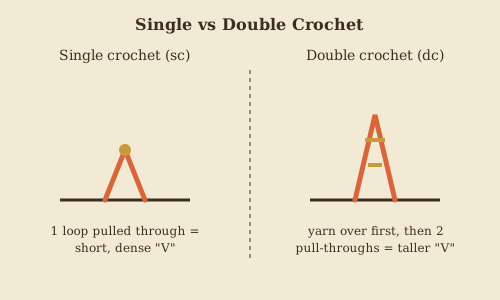
Single crochet is short and dense — each stitch is roughly as tall as it is wide, with almost no yarn-over height built in. Double crochet is taller and more open — two yarn-overs per stitch means more height per row, more visible "legs" in the stitch structure, and more give in the finished fabric.
Speed and yardage
Double crochet works up noticeably faster — fewer stitches needed to cover the same area means fewer total motions for the same size project, and it's genuinely the better choice when you're racing to finish a blanket before a deadline. It also uses somewhat less yarn per square inch than the same area in single crochet, since there's more open structure and less yarn packed into each stitch.
Warmth and density
Single crochet's tight, gap-free structure blocks more airflow, which makes it the better choice for anything meant to be genuinely warm — a winter hat, mittens, a blanket for a cold climate. It's also the stitch of choice for amigurumi specifically because its density hides stuffing without gaps showing through, which is why every amigurumi pattern on this site — the bunny, the panda, the doll — uses single crochet exclusively and never double.
Drape and structure
Double crochet's open, taller structure drapes more like woven fabric, which is why it shows up in scarves, garments, and anything meant to move and flow rather than hold a rigid shape. The dog bandana's corner-to-corner triangle relies on double crochet's height to build size quickly across a diagonal; a single-crochet version of the same pattern would need roughly twice as many rows to reach the same finished size.
A quick decision guide
| If the project needs... | Choose |
|---|---|
| Maximum warmth, wind resistance | Single crochet |
| Stuffing to stay hidden (amigurumi) | Single crochet |
| A firm, structured shape that holds itself up | Single crochet |
| To finish faster with less total yarn | Double crochet |
| Drape, flow, movement | Double crochet |
| A lacy or open, breathable fabric | Double crochet |
When patterns mix both
Many patterns use both stitches deliberately in the same piece — the amigurumi bear pattern's hood-and-body combination, or a garment with a dense single-crochet body and a taller double-crochet trim. Reading a pattern's stitch choice this way, as a deliberate decision rather than an arbitrary instruction, makes it much easier to substitute a different stitch confidently when you want to change a project's finished feel rather than just following the letter of someone else's pattern.
Hook size changes the comparison too
The stitch you choose isn't the only variable — hook size relative to yarn weight shifts both stitches along the same warm-to-drapey spectrum. A single crochet worked with a hook a size or two larger than the yarn's label recommends opens up noticeably, trading some of its usual density for more drape, closer to what double crochet would give at a standard hook size. The reverse is also true: double crochet worked with an undersized hook tightens up and loses some of its characteristic openness. If a project needs to land somewhere between the two stitches' usual character, adjusting hook size is often a simpler fix than switching stitches entirely.
A quick way to test before committing
Before starting a full project, work a small swatch in both stitches with the same yarn and hook, then hold both swatches up to a light source. Single crochet blocks most of the light; double crochet lets noticeably more through. That visual gap is a reasonably good proxy for warmth in the finished object — useful for deciding between the two before investing hours into a full blanket or garment.
There's no universally "better" stitch — only the better stitch for what a specific project actually needs to do once it's finished.
Frequently Asked Questions
Is half double crochet just a compromise between the two? Functionally, yes — hdc sits between single and double in both height and density, which makes it a reasonable middle-ground choice when a project wants some of each stitch's benefits without fully committing to either extreme.
Which stitch is better for a beginner's first blanket? Single crochet is generally more forgiving for a first project since its density hides small tension inconsistencies better than double crochet's more open structure, where uneven stitches are more visible.
Does the stitch choice affect how much the fabric stretches over time? Double crochet's taller, more open structure has more give and can stretch out of shape slightly more under sustained weight (like a heavy bag) than single crochet's tighter fabric — a real consideration for anything, like the market tote bag, that needs to hold its shape under load.
Keep going
- 01How to Bobble Stitch and Puff Stitch (The Two Textured Stitches Everyone's Using)Bobble and puff look similar in a photo and feel completely different in the fabric — one firm and angular, one soft and round. Both explained stitch-by-stitch, plus the swatch that shows you the difference in your own hands.stitches7 min read
- 02How to Change Colors in Crochet (Invisible Join, No Jog)The visible 'staircase' at a color change isn't inevitable — it's caused by finishing the last stitch in the old color instead of the new one. Here's the one-step fix, plus how to hide the join in rounds.stitches5 min read
- 03How to Read a Crochet Pattern (Abbreviations, Symbols, and Gauge Explained)Chain 2, turn, dc in each st across (18) doesn't look like English the first time you see it. Here's every abbreviation, bracket, and asterisk decoded, plus why gauge matters more than any of them.stitches7 min read