stitches · beginner · 7 min read
How to Read a Crochet Pattern (Abbreviations, Symbols, and Gauge Explained)
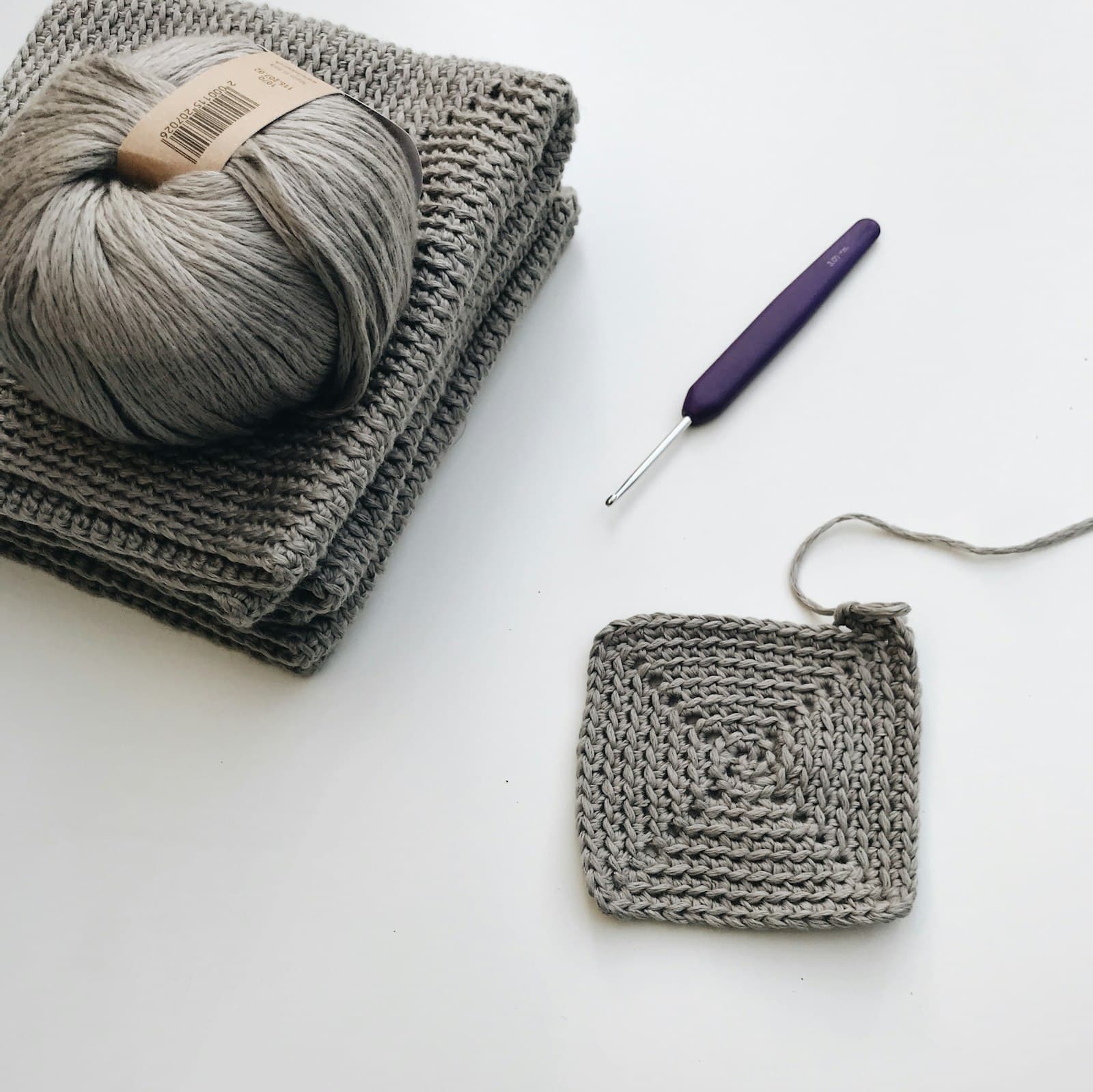
The first time a pattern hands you a line like Rnd 3: *2 sc in next st, sc in next st* rep around (18), it can look like a different language. It isn't — it's shorthand, and once you know what each piece means, every pattern on this site (and almost anywhere else) opens up the same way. This is the page to bookmark and come back to.
Abbreviations: the vocabulary
Patterns compress stitch names into two or three letters so a set of instructions doesn't run five times longer than it needs to. These are the ones you'll meet constantly:
| Abbreviation | Stitch |
|---|---|
| ch | chain |
| sl st | slip stitch |
| sc | single crochet |
| hdc | half double crochet |
| dc | double crochet |
| tr | treble crochet |
| st(s) | stitch(es) |
| rep | repeat |
| rnd | round |
| sk | skip |
| inc | increase (2 stitches in the same stitch) |
| dec | decrease (2 stitches worked together as 1) |
| yo | yarn over |
Every pattern worth using lists its own abbreviations near the top — treat that list as the dictionary for that specific pattern, since not every designer uses every term the same way.
US terms vs. UK terms (read this before you start)
This is the single biggest source of "I followed it exactly and it came out wrong." The same word means a different stitch depending on which system a pattern was written in:
| US term | UK term | Actual stitch |
|---|---|---|
| single crochet (sc) | double crochet (dc) | shortest stitch, one yarn over |
| half double crochet (hdc) | half treble (htr) | medium stitch |
| double crochet (dc) | treble (tr) | taller stitch, two yarn overs |
| treble (tr) | double treble (dtr) | tallest common stitch |
Every pattern on Loop & Yarn uses US terms. If you're working from a pattern that doesn't say which system it uses, check whether "double crochet" produces a short, dense stitch (US) or a taller, open one (UK) in the first few rows — the fabric tells you immediately.
Symbols and punctuation
Once the words are sorted, the punctuation is doing real work too:
- Asterisks (
*...*) mark a sequence you repeat.*sc, ch 1, sk 1* rep aroundmeans: do everything between the asterisks, over and over, for the rest of the round. - Parentheses
( )or brackets[ ]group stitches worked into a single stitch or space.(2 dc, ch 2, 2 dc) in next stmeans all of that goes into one stitch — it's a cluster, not five separate stitches spread out. - The number at the end of a line, usually in parentheses, is your stitch count for that row or round.
(18)means you should have 18 stitches when you finish. This is the single most useful piece of punctuation in the whole pattern — more on why below. - A comma is a full stop inside an instruction. Read to the comma, do that, then read to the next one. Trying to hold an entire unbroken line in your head is where mistakes creep in.
Gauge: the part everyone skips and shouldn't
A gauge line looks like Gauge: 14 sts x 16 rows = 4" x 4" in sc. It's telling you: if you crochet a 4-inch square in single crochet with the yarn and hook the pattern calls for, it should contain 14 stitches across and 16 rows tall. To check your own gauge, crochet a swatch a little larger than 4 inches in each direction, lay it flat without stretching it, and measure a 4-inch span in the middle with a ruler or tape measure, away from the curled edges. If your own swatch comes out with more stitches than that in the same 4 inches, your tension is tighter than the designer's — you're crocheting "small" — and a hat sized for an adult head will come out toddler-sized. Fewer stitches means the opposite. For anything with an exact finished size (garments, hats, anything that needs to fit), swatching first is the only way to know your gauge before you're three hours into row 40. For a full walkthrough of matching hook size to yarn weight, see how to choose yarn and hook size.
Why that stitch count in parentheses is your best friend
Here's the habit that catches almost every mistake before it compounds: check the stitch count at the end of every round, every time, especially in anything worked in the round (hats, amigurumi, granny squares). If the pattern says (24) and you count 22, you've lost 2 stitches somewhere in that round — not three rounds ago, not "eventually," in the round you just finished. That means the fix is a two-minute frog-back, not an unraveled afternoon. Counting stitches feels slow the first few times. It's the fastest debugging tool in the craft once it's a habit.
Reading a full line, piece by piece
Take a real line: Rnd 4: ch 1, *dc in next 2 sts, 2 dc in next st* rep around, join with sl st to first dc (30).
Broken into its actual steps: first, chain 1 (this sets up your first stitch, it doesn't count as one here, so don't skip a stitch to account for it). Next, work the repeat: double crochet in the next 2 stitches, then work 2 double crochets into the following stitch (that's the increase — two full stitches landing in one spot, which is what grows the round). Repeat that three-stitch sequence all the way around, right back to where you started. Finish by slip-stitching into the top of your very first double crochet to close the round; you'll feel a small tug as the loop cinches shut, which tells you the round is properly joined rather than left open. Count before moving on: you should land on 30 stitches total, and if you're off by even one or two, it's almost always inside the repeated section rather than at the join.
Read that way, there's no line in a beginner or intermediate pattern that isn't just vocabulary plus punctuation, worked one comma at a time. The 5 stitches guide covers the actual motions your hands make for sc through slip stitch; this page is the map for the words around them.
Frequently Asked Questions
Why do some patterns use British/UK terms instead of US terms? Pattern terminology tends to follow the designer's home country — UK, Australian, and many European designers commonly write in UK terms, while most US, Canadian, and many independent designers online use US terms. Always check which system a pattern states before starting, since assuming wrong changes your actual finished stitch height.
What does "as established" mean in a pattern? It means: keep repeating the stitch pattern you've already been working, adjusted only for the specific instruction given (like an increase or decrease), without the designer re-explaining the whole repeat again. It shows up most often once a stitch pattern is already several rows in.
Do I need to memorize all the abbreviations before starting a pattern? No — keep the pattern's own abbreviation key open and refer back to it as needed for the first several projects. Most crocheters absorb the common ones (ch, sc, dc, st) within a project or two simply through repetition.
Keep going
- 01How to Crochet a Magic Ring (Step by Step)The magic ring is the invisible start that makes amigurumi circles close completely — no hole in the middle, ever. Ten minutes to learn, and you'll never go back to the chain-2 start.amigurumi7 min read
- 02Corner-to-Corner (C2C) Crochet Tutorial for BeginnersC2C builds a project diagonally, one small block at a time, which is exactly what turns crochet into pixel art. Here's the technique from the very first block to a finished square.stitches5 min read
- 03How to Crochet a Flat Circle (Without It Curling or Ruffling)Every flat circle follows the same increase math — 6 more stitches every round. Here's the formula, plus the two exact fixes for a cupping circle and a ruffling one.stitches5 min read