home-decor · free-pattern · beginner · 6 min read
Easy Cotton Dishcloth Pattern (A Perfect First Project)
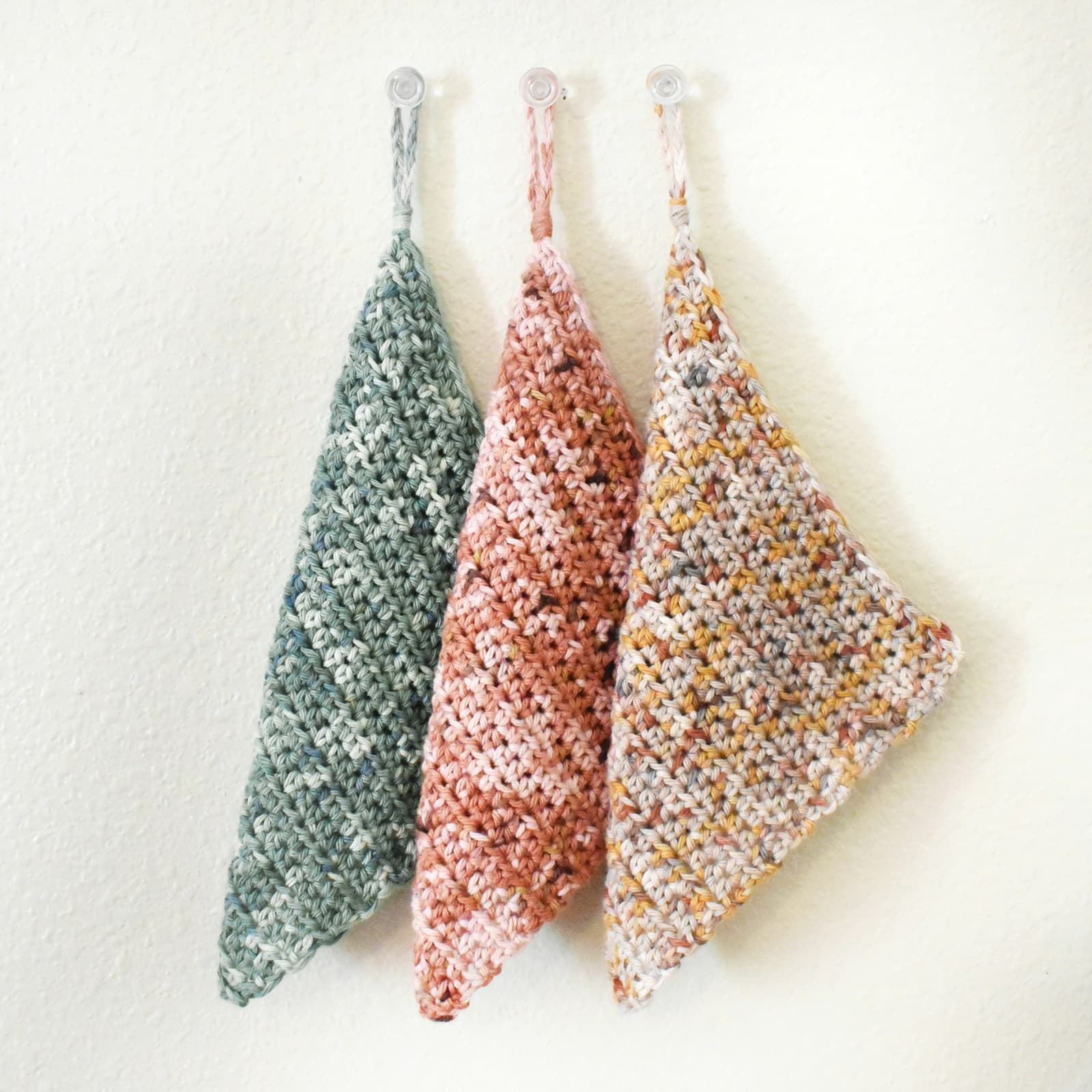
Ask a room of crocheters what their first finished object was, and half the room will say "a dishcloth" — usually one corner slightly longer than the other, proudly in use for years anyway. It's the perfect first project: only one stitch, no shaping, no buttons or seams, and the finished item is actually useful from the very first wash.
This pattern uses single crochet and half double crochet only. If those are still new to you, the five beginner stitches guide covers both in about five minutes.
What you need
- Yarn: one ball of worsted-weight cotton (the classic kitchen cotton, like Lily Sugar'n Cream or any store brand equivalent — about 70 yards for one cloth). Cotton, not acrylic: cotton absorbs water and survives hot washes; acrylic melts against hot pans. This is the one place I'd say the fiber choice genuinely matters.
- Hook: 5.5mm (US I-9) — slightly larger than the yarn label suggests, on purpose: cotton is inelastic and a little extra breathing room keeps your hands from tiring. See the yarn and hook size guide for why.
- Tapestry needle for the ends.
Finished size: approximately 9 × 9 inches. Gauge isn't critical — that's the luxury of a dishcloth. If your cloth comes out 8×8, it's still a dishcloth.
All terms are US crochet terms.
The pattern
Foundation: Chain 26.
Row 1: Skip the first two chains from the hook, and work 1 hdc into the third chain (those two skipped chains count as your first hdc, so don't work into them separately). Then work 1 hdc into every remaining chain across the row. Count your stitches before you turn: you should have 25 hdc total. Chain 1, turn.
Rows 2–24: Work your first hdc into the first stitch of the row, which sits directly at the base of your turning chain (this is the stitch new crocheters most often skip; see the mistake-fixing guide if your count keeps coming up short). Then continue with 1 hdc into every stitch across the rest of the row. Chain 1, turn. Every row should hold 25 stitches, and the fabric should look like a tidy grid of V's with straight side edges, not a wandering trapezoid. Count at the end of each row until you're confident — this is exactly the project to build that habit on.
Last row (the edge): Switch to single crochet for one final row. Working 1 sc in every stitch across (still 25 stitches) gives the bottom edge the same density as the sides, so the cloth hangs evenly instead of flaring at the corners. Fasten off, leaving a 6-inch tail.
Finishing: Thread the tail onto your tapestry needle and weave both ends in along a row of stitches, splitting the fabric's ridges as you go so the yarn tucks inside rather than sitting on top. Weave each end in one direction, then back a stitch or two in the opposite direction, so it can't work itself loose. Trim close to the fabric. That's it. You're holding a dishcloth.
Making it square: three honest tricks
Dishcloth edges have a habit of bulging at the sides. Three things keep it square:
- Count to 25. Every row. The cloth is small enough that counting takes five seconds, and it's the single habit that prevents the trapezoid (see mistake #1 and #2 in the mistake guide).
- Chains for the turn, not for height. The single chain-1 before turning is enough for hdc. Turning chains of 2 or 3 on hdc create loopy edges that read as "grew an extra stitch."
- Light tension, smaller hook if needed. If your edges look ruffled, your tension is looser than your foundation chain — go down to a 5mm hook and the rows will sit flush.
Variations once you've made one
- The color stripe: change colors every 6 rows by working the last stitch of the row in the old color and finishing it with the new one. Four balls of kitchen cotton make a whole matching set.
- The scrubby edge: after the last row, work one round of single crochet around the entire cloth (3 sc in each corner), then slip stitch the ends together — a simple border that stops the edges stretching out of shape in the wash.
- Bigger/smaller: add or subtract 2 chains and work the same rows for roughly an inch of size change each way.
Why this little square matters more than it looks
This pattern quietly teaches the four things every future project is made of: a foundation chain that isn't too tight, straight edges, even hdc tension, and clean finishing with woven ends. Master it and you've genuinely got the base of the granny square blanket, washcloths, scarves, and anything rectangular.
Plus, honestly: your first finished object should be useful. Making something you'll actually reach for every day at the sink does more for motivation than any tutorial ever will. Make three and you'll be ready for the magic ring and your first amigurumi — or stay in the same flat-square skill set and go straight to a coaster set or a mug cozy, both built from the same rounds-and-rows habits.
Frequently Asked Questions
Why is cotton yarn specifically recommended for dishcloths? Cotton absorbs water well, tolerates frequent hot washing without felting or shrinking the way wool would, and holds up to scrubbing far longer than acrylic, which tends to pill and flatten under abrasive use.
How long does a crochet dishcloth actually last with regular use? With weekly rotation and machine washing, a well-made cotton dishcloth typically lasts a year or more of regular kitchen use before the fabric starts thinning enough to retire it to a rag.
Can I felt this pattern into something firmer? Cotton doesn't felt the way wool does, so this specific pattern won't shrink into a firmer fabric through washing — if a felted texture is what you want, that requires switching to a 100% animal-fiber wool yarn and a different finishing process entirely.
Keep going
- 01Halloween Monster Mug Cozy Pattern (One-Eyed and Friendly)The same ribbed tube as the everyday mug cozy, dressed up with a googly eye, two felt fangs, and a pair of horns — a seasonal novelty piece that finishes in under an hour.home-decor6 min read
- 02Crochet Keychain Pattern (Scrap Yarn, 15 Minutes)A tiny amigurumi ball, a flower, or a simple tassel — three keychain bases that each finish in under 20 minutes and turn a keyring into a genuine handmade gift.free-pattern6 min read
- 03Crochet Market Tote Bag Pattern (Holds a Full Grocery Run)A flat base, straight sides worked in the round, and sturdy cotton yarn — a grocery-run tote that actually holds weight, not a decorative bag that stretches out of shape by the second trip.home-decor6 min read