tips · beginner · 5 min read
The Beginner Crochet Toolkit: What You Actually Need (and What to Skip)
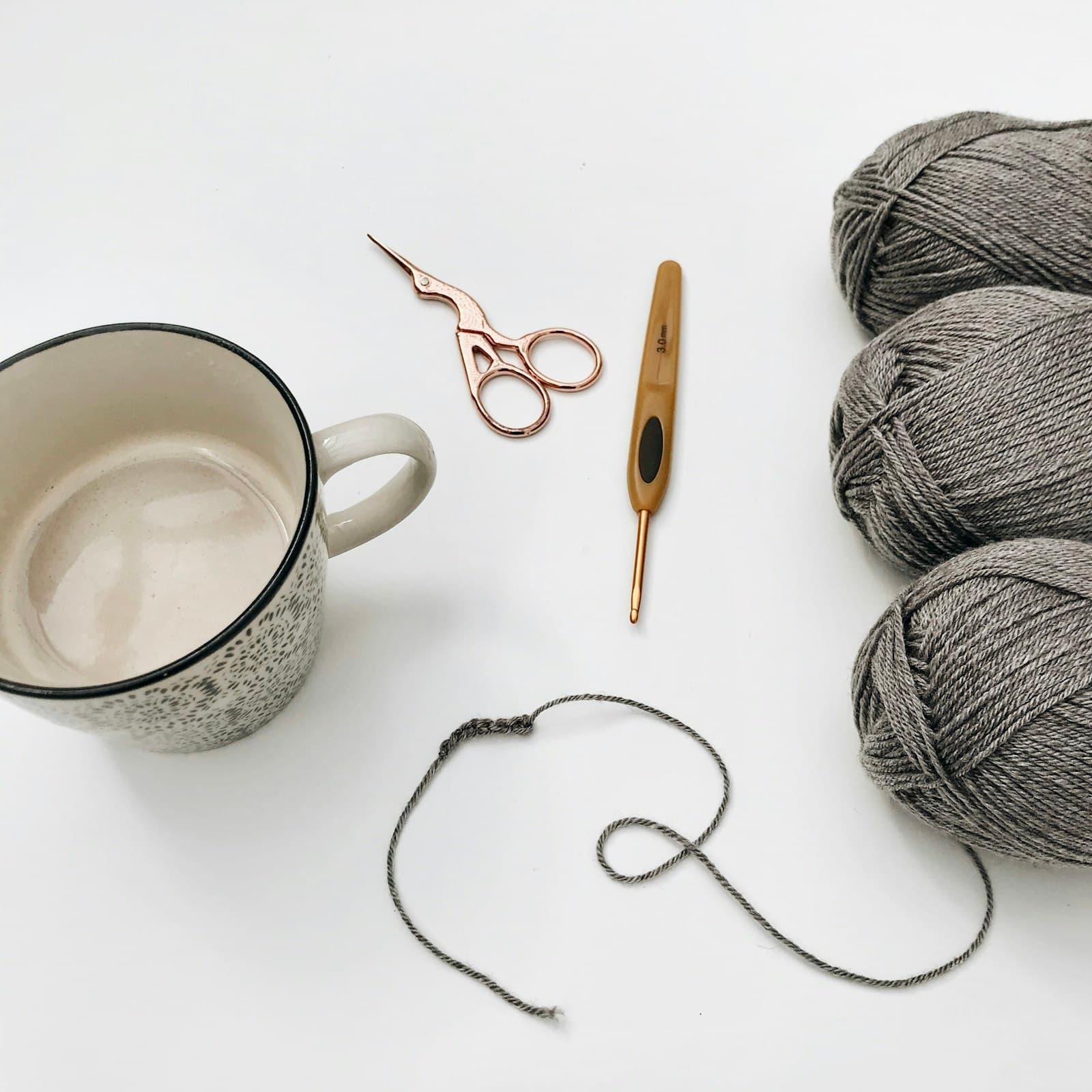
Walk into any craft store and the crochet aisle will happily sell you forty different gadgets before you've made your first chain. Here's the truth: almost everything you'll actually reach for in your first year of crocheting fits in one small pouch, and you probably have some of it in a kitchen drawer already.
This is the list I hand to every friend who asks "what do I need to buy?" — including the two things people think they need but really don't.
1. Crochet hooks (start with three, not a set)
You don't need the whole range yet. Most beginner projects use worsted weight yarn, and worsted yarn is happiest with a 5mm to 5.5mm hook (US H-8 to I-9). Add a 4mm (G-6) for slightly finer work and a 6mm (J-10) for chunkier yarn, and you're covered for months.
If your budget stretches to one more purchase, make it a soft-grip ergonomic hook — your hands will thank you around week three, when you realize you've been crocheting an hour a day. I explain the trade-offs between aluminum, bamboo, and ergonomic hooks in detail in my honest hook materials comparison.
2. Yarn: one ball, light color, smooth texture
Your first yarn should be a worsted weight (category 4), light-colored, smooth acrylic or cotton. Light colors show your stitches; dark navy and black hide them completely, which makes learning twice as hard. Skip anything fuzzy, sparkly, or heavily textured for now — novelty yarn makes stitch-counting miserable.
One ball of good worsted acrylic costs about as much as a sandwich and will survive being ripped out a dozen times, which is exactly what your first projects should do. See how to choose yarn and hook sizes if you want the full rundown on weights and gauge.
3. Tapestry needles (yarn needles)
These are the big-eye, blunt-tip needles used to weave in ends and sew pieces together. They cost a dollar or two for a pack of three. The blunt tip matters: it slides between yarn strands instead of piercing them. Get metal ones — plastic needles bend annoyingly when you're fighting a thick seam on your first amigurumi bunny.
4. Stitch markers
A stitch marker is anything that clips onto a stitch and stays put: split key rings, bobby pins, safety pins, or actual plastic locking markers (a few dollars for dozens). You'll use them most in the round, to mark where each round begins so you stop losing count. Paper clips work in a pinch; small rubber bands from the stationery aisle work too.
Freezer section "strange but true": some crocheters use leftover scraps of contrasting yarn tied loosely around stitches. It works, it's free, and you'll never run out.
5. Scissors
Any sharp pair you already own. Small scissors or foldable travel scissors live happily in the project pouch. There is no such thing as a crochet-specific scissors you need to buy — this is a drawer item, not a purchase.
6. A tape measure (or ruler)
Because "is this turning into a potholder or a placemat?" is a measuring question, not a guessing question. A soft sewing tape measure is ideal since it curves with your fabric, but a rigid ruler handles flat swatches fine. Once you start caring about gauge, you'll use this on literally every project.
7. Something to hold it all
A zip pouch, a small drawstring bag, even a gallon zip-top bag. Your toolkit is small enough that the container matters less than having one place where it always lives, so you're not hunting for a needle every time you finish a row.
What to skip for now
- Blocking mats and pins. Useful eventually for lace and garment pieces, but nothing you'll make in your first months needs blocking. Cross that bridge when a pattern asks for it.
- Yarn bowls and umbrella winders. Lovely, not necessary. A yarn ball sitting on the table next to you does the same job.
- Giant hook sets. The 20-piece sets with hooks from 2mm to 12mm look like great value, but you'll reach for three of them. Buy those three individually, in better quality, for the same money.
- Row counters, yarn guides, tension rings. Your first row counter is a scrap of paper and a pencil. Add gadgets only when you notice a specific repeated annoyance they'd solve.
The starter kit in one line
One 5mm hook, one 4mm hook, one ball of light worsted acrylic, tapestry needles, a handful of stitch markers, scissors, a tape measure — roughly the cost of two coffees, ready to make everything on this site.
Want to put it to work? Start with the five stitches every beginner needs, then make something real with the easy cotton dishcloth pattern — it uses nothing but the toolkit above.
Frequently Asked Questions
Do I need a full hook set to start, or just one size? Just one size to start — a 5.0mm hook with worsted weight yarn covers most beginner patterns. A fuller set becomes useful once you're following patterns that call for a range of yarn weights.
Are stitch markers really necessary for a beginner? For anything worked in a continuous spiral (most amigurumi), yes — without one it's genuinely easy to lose track of where a round started. For flat, row-based projects like a dishcloth or scarf, they're optional.
What's the single most overlooked tool on this list? A yarn needle with a large enough eye and a blunt tip — cheap, easy to forget when buying supplies, and the one tool every single finished project needs for weaving in ends, regardless of what else the pattern calls for.
Keep going
- 01How to Fix Common Crochet Mistakes Before You Rip Everything OutRows shrinking, rows growing, twisted foundations, mystery holes — every common beginner crochet mistake, what actually caused it, and the smallest fix that works.tips8 min read
- 02How to Choose the Right Yarn and Hook Size (So Your Gauge Actually Matches)Yarn weight, hook size, and gauge explained simply, so your finished project comes out the size the pattern promised.tips4 min read
- 03Aluminum vs Bamboo vs Ergonomic Crochet Hooks: An Honest ComparisonThe material your hook is made from changes how you crochet more than you'd expect — speed, grip, noise, even how your joints feel after an hour. Here's how the main options actually compare.tips5 min read